Program America - Dream. Build. Achieve. aims to open new doors and build new perspectives that will empower young people in their further academic and professional development.
With the goal of connecting high school and university students through entrepreneurial encouragement, learning about Serbian-American relations throughout history, and gaining knowledge about the United States of America, this program represents a unique and pioneering educational initiative of its kind.
Through carefully designed lectures and dynamic, interactive learning formats, participants move beyond superficial perceptions. They are encouraged to think critically and actively engage in exploring the cultural, political, and economic dimensions of American influence.
This program is not merely an opportunity for learning. It is an incentive for personal and professional growth. It promotes inclusive and quality education, contributes to reducing inequalities, and empowers young people with relevant knowledge and skills. Special emphasis is placed on the historical foundations and contemporary development of Serbian-American relations, while also addressing key global topics such as decent work and economic growth, innovation and entrepreneurship, responsible consumption, and sustainable development.









The desire to improve relations is not, and must not become, an empty phrase.
If we pause for a moment to consider the aspirations of young people today, we would realize that the desire for a stable, promising, and predictable future—one in which individuals can fully realize their potential—is closely aligned with the broader vision embodied in the concept of the American Dream.
The American Dream represents a globally inspiring ideal in which the conditions necessary for both individuals and societies to pursue happiness are achieved, thereby fulfilling the vision set forth in the 1776 Declaration of Independence of the United States. The concept of the pursuit of happiness became the foundation of what James Truslow Adams would later describe in his 1931 book Epic of America as the “American Dream.”
Systemic support for individual achievement—where personal success helps move society forward and creates opportunities for progress and modernization—is perhaps best illustrated through entrepreneurship and the efforts of ambitious individuals who sought to accomplish great things during their lifetimes and improve the world around them.
This reflects the fundamental concept of the United States: a nation rooted in commerce and enterprise, one that naturally globalizes its culture, influence, and historical legacy, transcending the fluctuations and challenges that may arise throughout the evolution of the American Dream.
It is precisely the American Dream, together with the societal principles that underpin it, that serves as a point of connection between Serbia and the United States.
Public opinion surveys and research on the attitudes of young people in Serbia toward the United States reveal certain fluctuations over time and, in recent years, somewhat more positive trends. Yet one element remains firmly established: the desire to improve Serbian-American relations.
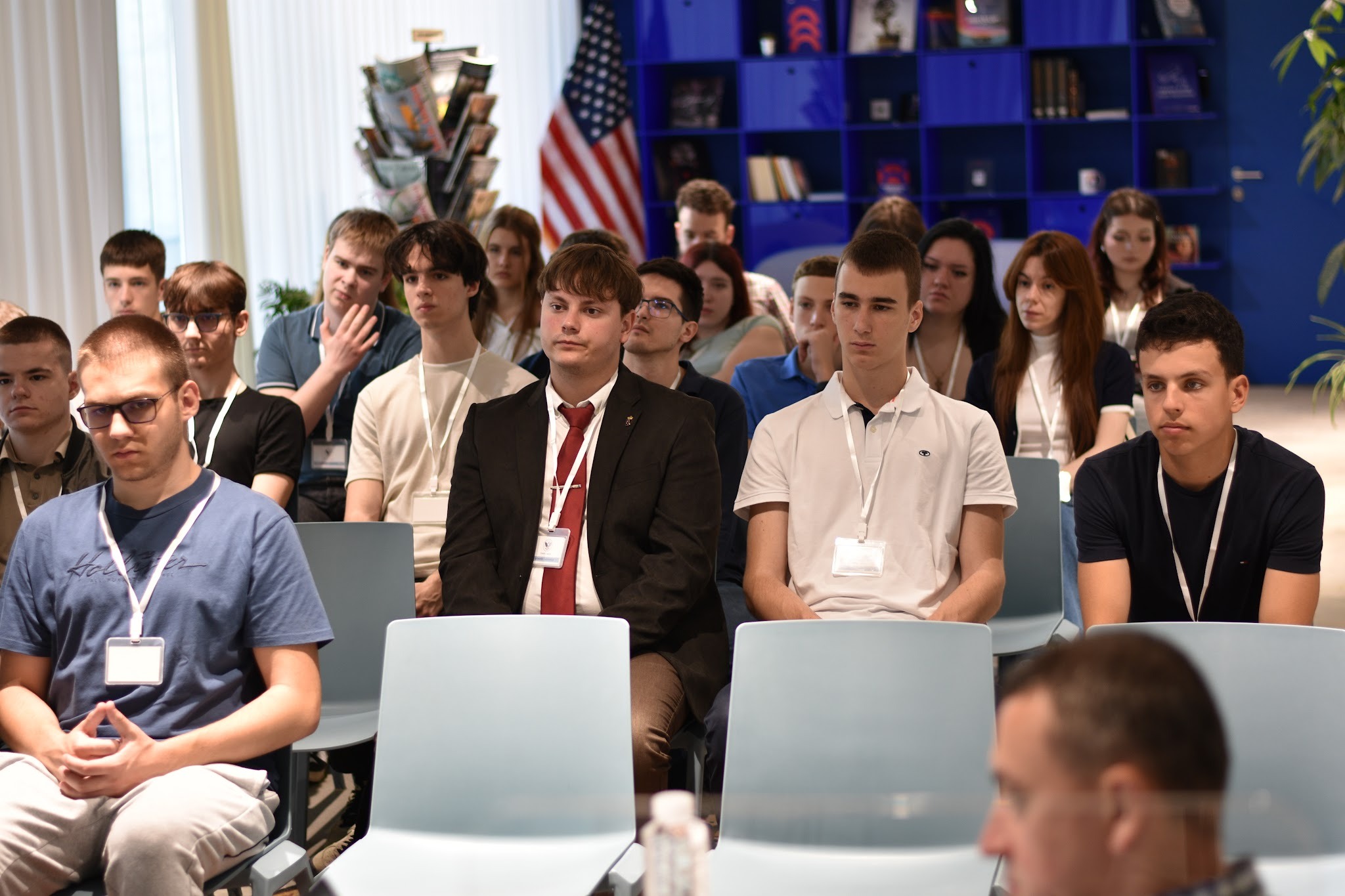
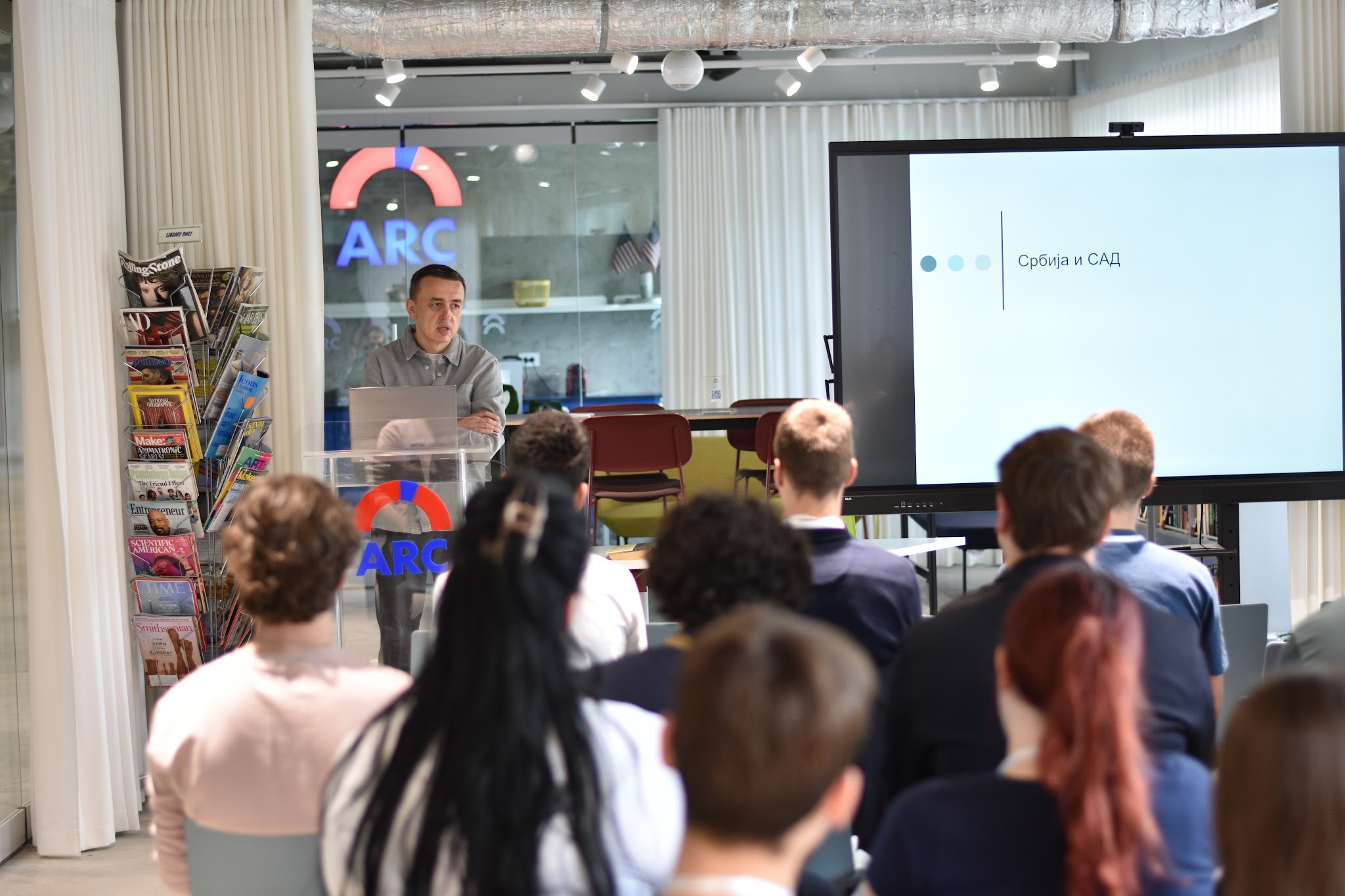
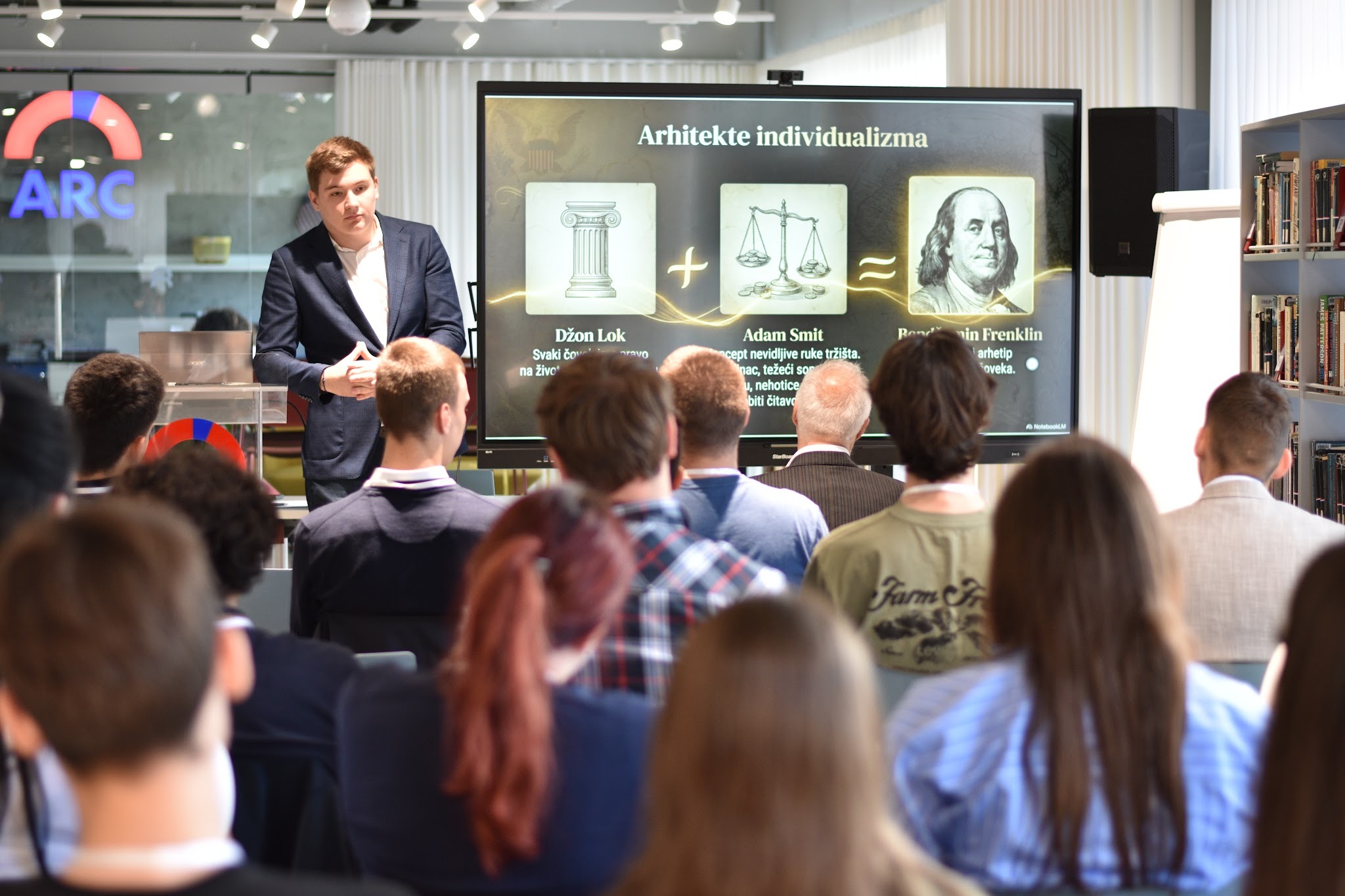
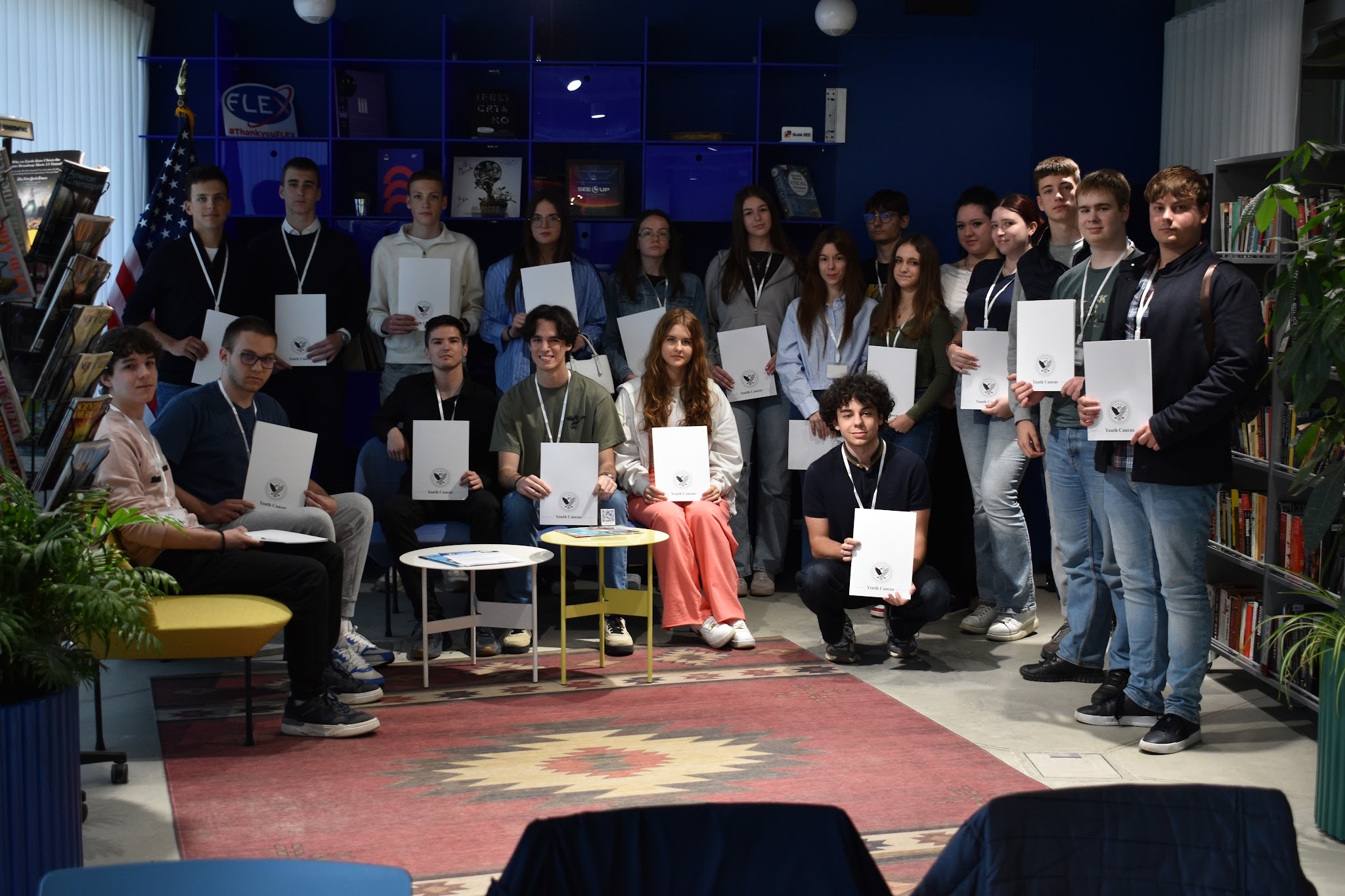
With the conviction that young people are the pathway toward a successful and modern future—and, I would argue, toward Serbia’s future as a member of the European Union—the organization Youth Caucus was founded in July 2025. On May 11 and 12, with the support of the American Resource Center in Serbia and the U.S. Embassy in Belgrade, the organization implemented the innovative program Dream. Build. Achieve.
The program’s primary goal was to bring together high school students from Belgrade, as well as university students—predominantly from the University of Belgrade—through entrepreneurial encouragement and education about Serbian-American relations.
Participants’ noticeable surprise at various geographical and historical facts about the United States significantly increased their interest in topics such as the presence of the United States in everyday life, the historical development of Serbian-American relations, and entrepreneurship, which were explored throughout the program.
As participants recognized American influences in both their everyday environment and the digital world—along with entrepreneurship, for which the United States serves as a global benchmark and cradle—the lecture on the development of Serbian-American relations through the centuries proved particularly impactful.
Information about U.S.-Serbian relations during the nineteenth and early twentieth centuries, which often remains absent from public discourse (whether intentionally or unintentionally, I leave to the reader’s judgment), sparked a wave of questions and discussion within an objective and critical atmosphere throughout the program.
One especially notable outcome among participants was a growing desire to engage more deeply in researching the United States and our bilateral relations. Many recognized that this path offers valuable tools for their future academic and professional advancement—something of vital importance to any society.
This initiative demonstrated that sustainable attitudes and genuine motivation can only be built upon objective and truthful foundations.
Young people, understandably and from a human perspective, are often able to approach discussions about improving Serbian-American relations with fewer stereotypes—or none at all—than previous generations.
For that dialogue to be productive, it must be grounded in the same principles that shaped participants’ perspectives during the Dream. Build. Achieve. program: factual, objective, and critical thinking. Even if the natural enthusiasm of young people regarding their future is not always a sufficiently strong driver of public dialogue, there will always remain the less visible, yet undeniable and natural ties between the people of Serbia and the United States. Equally important are the pragmatic considerations that emerge when reflecting on the world’s largest economy—the United States—which is likely to remain a leading global, and in our context regional, engine of development for years to come.
Novak Đurić
President, Youth Caucus